Walter Williams (Brian Donlevy) is a take-charge captain of industry who has worked his way up in a San Francisco steel company from a position as a sheet metal worker. He loves his wife Irene (Helen Walker) very much and they have planned a vacation drive together. Irene cancels at the last minute claiming a toothache, but asks that Walter drive her cousin Jim Torrance (Tony Barrett) as far as Illinois. Walter agrees and he and Jim take off together but later Jim knocks Walter unconscious and takes the car only to be hit himself by a truck and killed, his body burned beyond recognition. Walter comes to and suffering a concussion and deep confusion from feeling betrayed by Irene hides out in a small Midwest town until guilt and peer pressure force him to go back to San Francisco and tell his story to the Police. But by the time Walter returns to San Francisco a clever detective Lieutenant Quincy (Charles Coburn) has uncovered some facts about Irene and her cousin' Jim. The police have been holding Irene for the murder of her husband Walter but release her considering that Walter was hiding out because he had killed Jim. Along the way to uncovering the truth in Court Walter realizes some hard fact about what he holds valuable and the trust he has put in those around him.
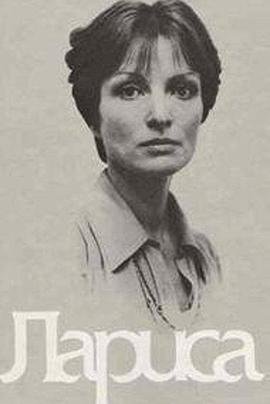
A loving film tribute to Russian filmmaker Larisa Shepitko, who died tragically in a car accident in 1979 at the age of 40. This documentary by her husband, Elem Klimov, includes excerpts from all of Shepitko's films, and her own voice is heard talking about her life and art. Elem Klimov's grief-stricken elegy Larisa examines the life of his late wife—the film director Larisa Shepitko—through a series of direct-address interviews and photomontages, set against a mournful visual-musical backdrop. Typically, Klimov films his subjects (which include himself and several of Shepitko's collaborators) within a stark, snow-covered forest, its tangled web of trees standing in as metaphorical representation of a perhaps inexpressible suffering, the result of Shepitko's premature death while filming her adaptation of Valentin Rasputin's novella Farewell to Matyora. Interweaving home movie footage with sequences from Shepitko's work (Maya Bulgakova's pensive plane crash reminiscence from Wings takes on several new layers of resonance in this context), Larisa's most powerful passage is its first accompanied by the grandiose final music cue from Shepitko's You and I, Klimov dissolves between a series of personal photographs that encompass Larisa's entire life, from birth to death. This brief symphony of sorrow anticipates the cathartic reverse-motion climax of Klimov's Come and See, though by placing the scene first within Larisa's chronology, Klimov seems to be working against catharsis. The pain is clearly fresh, the wound still festering, and Klimov wants—above all—to capture how deep misery's knife has cut.