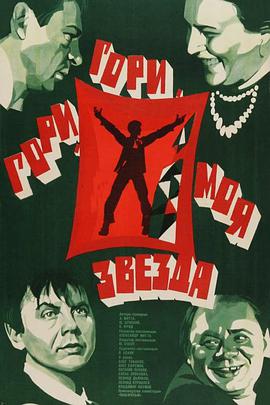
A heroic fantasy about an artist’s destiny at the tumultuous time of social transformations. One of director Alexander Mitta’s best films. The south of Russia, 1920. In a town square, a mono-performance is on, based on Shakespeare’s “Julius Caesar”. The film’s hero who took the pseudonym “Revarm”, which stands for “Revolutionary Art for the Masses”, is seriously interested in theatre. The real life and the stage one are intertwined in his destiny. In a provincial town where the power continuously changes hands, going from the Reds to the Whites, from the Whites to a band of the Greens, this youthful stage reformer, endowed with the gift of persuasion, attracts people to his cause, leaving no one indifferent.…
Summary
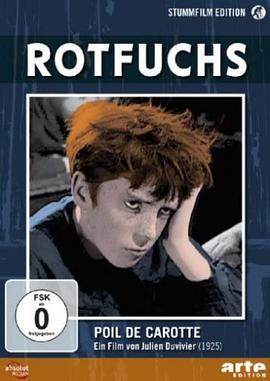
Bullied by his matriarchal mother, abused by his siblings, ignored by his father, Poil de Carotte's childhood is as miserable as it could be. An illegitimate child, he is the main reason for the enmity which exists between his parents, who continue to live together just to keep up appearances. In the end, Poil de Carotte's suffering becomes more than he can bear...
Review
Drawing heavily on the poignant novel by Jules Renard on which it is based, Poil de carotte is a modest yet appealing film which has stood the test of time mainly because of the quality of its acting performances and its inherent humanity. It is more memorable than Julien Duvivier's earlier silent version of 1925, also named Poil de Carotte.
The part of Poil de Carotte was played by 11 year old Robert Lynen, who was alleged to have been discovered whilst walking down the Champs-Elysées in Paris. Lynen is totally captivating and the film made him an instant star, launching what looked like becoming a very promising film career – until he was shot dead whilst fighting against the Germans in 1944. Harry Baur, a legendary stage and film actor (who also died during World War II, allegedly at the hands of the Gestapo), also turns in a typically fine performance. The reconciliation between father and son at the end of the film provides its most enduring image, enough to melt the heart of all but the most stoical of spectators.