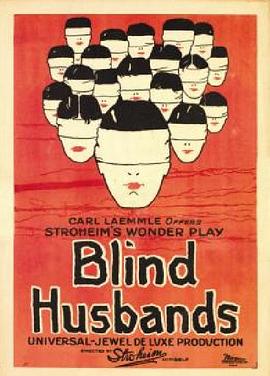
Two differences between this Austrian version and the generally available American version are immediately obvious they differ both in their length and in the language of the intertitles. The American version is only 1,883 metres long - at 18 frames per second a difference of some 7 minutes to the Austrian version with 2,045 metres. Whereas we originally presumed only a negligible difference, resulting from the varying length of the intertitles, a direct comparison has nevertheless shown that the Austrian version differs from the American version both in the montage and in the duration of individual scenes. Yet how could it happen that the later regional distribution of a canonical US silent film was longer than the original version The prevalent American version of Blind Husbands does not correspond to the version shown at the premiere of 1919. This little-known fact was already published by Richard Koszarski in 1983. The film was re-released by Universal Pictures in 1924, in a version that was 1,365 feet (416 metres) shorter. At 18 frames per second, this amounts to a time difference of 20 minutes! Titles were altered, snippets of action removed and at least one major scene taken out entirely, where von Steuben and Margaret visit a small local chapel. (Koszarski) From the present state of research we can assume that all the known American copies of the film derive from this shortened re-release version, a copy of which Universal donated to the Museum of Modern Art in 1941. According to Koszarski the original negative of the film was destroyed sometime between 1956 and 1961 and has therefore been irretrievably lost. This information casts an interesting light on the Austrian version, which can be dated to the period between the summer of 1921 and the winter of 1922. Furthermore, the copy is some 200 metres longer than the US version of 1924. If one follows the details given by Richard Koszarski and Arthur Lennig, this means that, as far as both its date and its length are concerned, the Austrian version lies almost exactly in the middle between the (lost) version shown at the premiere and the re-released one.A large part of the additional length of the film can be traced to cuts that were made to the 1924 version in almost every shot. Koszarski describes how the beginning and the end of scenes were trimmed, in order to speed up the film. However, more exciting was the discovery that the Austrian version contains shots that are missing in the American one - shotscountershots, intertitles - and furthermore shows differences in its montage (i.e. the placing of the individual shots within a sequence). All this indicates that Die Rache der Berge constitutes the oldest and most completely preserved material of the film.
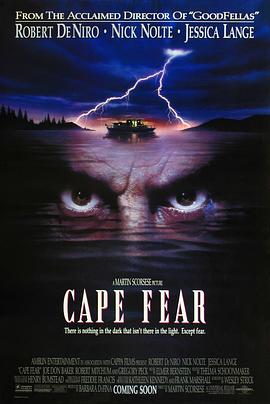
迈克斯(罗伯特•德尼罗 Robert De Niro 饰)因为强奸而遭到起诉,他找来了律师萨姆(尼克·诺尔蒂 Nick Nolte 饰)为自己辩护;他有所不知的是,萨姆是一个女权主义者。出于义愤,萨姆在辩护是故意隐瞒了一项对迈克斯有利的证据,最终导致了迈克斯被多判了6年。本来不懂法律的迈克斯在狱中通过自学法律发现了萨姆对他的背叛,发誓一定要找萨姆报仇。 一晃14年过去了,迈克斯刑满获释了,他开始展开他的复仇计划。他首先在萨姆家附近出现,引起他们的恐慌;随后,萨姆派来对付他的人被他打得落花流水;他之后潜入萨姆家杀死了保镖和厨娘。惊惶不安的萨姆一家逃到了一个叫“恐怖角”的地方,迈克斯也尾随而至……
During a cross-country lecture tour, notoriously acerbic radio personality Sheridan Whiteside slips on the icy steps of the house of the Stanleys, a prominent Ohio family, and is forced to recuperate in their home during the Christmas holidays. The overbearing, self-centered celebrity soon comes to dominate the lives of the residents and everyone else who enters the household. He encourages young adults Richard and June Stanley to pursue their dreams, much to the dismay of their conventional father Ernest. Meanwhile, Whiteside's spinster assistant Maggie Cutler finds herself attracted to local newspaperman Bert Jefferson. When she reads Bert's play, she is so impressed she asks Whiteside to show it to his contacts, and then announces she will quit his employment and marry Bert. However, her boss is loath to lose such an efficient aide and does his best to sabotage the blossoming romance...