德明影视 德明影视

确认

购买本片需要支付0金币,确定要购买吗?

取消

确定

影视简介
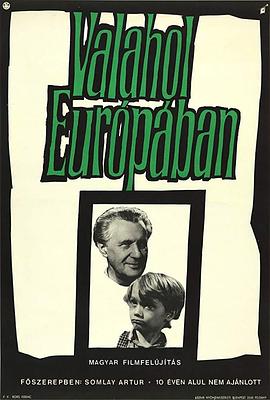
Somewhere in the remote region, the war ends. In the midst of ruined cities and houses in the streets, in rural hamlets, everywhere where people still live, are children who have lost their homes and parents. Abandoned, hungry, and in rags, defenseless and humiliated, they wander through the world. Hunger drives them. Little streams of orphans merge into a river which rushes forward and submerges everything in its path. The children do not know any feeling; they know only the world of their enemies. They fight, steal, struggle for a mouthful of food, and violence is merely a means to get it. A gang led by Cahoun finds a refuge in an abandoned castle and encounters an old composer who has voluntarily retired into solitude from a world of hatred, treason, and crime. How can they find a common ground, how can they become mutual friends The castle becomes their hiding place but possibly it will also be their first home which they may organize and must defend. But even for this, the price will be very high.  To this simple story, the journalist, writer, poet, scriptwriter, movie director, and film theoretician Béla Balázs applied many years of experience. He and the director Géza Radványi created a work which opened a new postwar chapter in Hungarian film. Surprisingly, this film has not lost any of its impact over the years, especially on a profound philosophical level. That is to say, it is not merely a movie about war; it is not important in what location and in what period of time it takes place. It is a story outside of time about the joyless fate of children who pay dearly for the cruel war games of adults.  At the time it was premiered, the movie was enthusiastically received by the critics. The main roles were taken by streetwise boys of a children's group who created their roles improvisationally in close contact with a few professional actors, and in the children's acting their own fresh experience of war's turmoil appears to be reflected. At the same time, their performance fits admirably into the mosaic of a very complex movie language. Balázs's influence revealed itself, above all, in the introductory sequences an air raid on an amusement park, seen in a montage of dramatic situations evoking the last spasms of war, where, undoubtedly, we discern the influence of classical Soviet cinematography. Shooting, the boy's escape, the locomotive's wheels, the shadows of soldiers with submachine guns, the sound of a whistle—the images are linked together in abrupt sequences in which varying shots and expressive sharp sounds are emphasized. A perfectly planned screenplay avoided all elements of sentimentality, time-worn stereotypes of wronged children, romanticism and cheap simplification. The authors succeeded in bridging the perilous dramatic abyss of the metamorphosis of a children's community. Their telling of the story (the scene of pillaging, the assault on the castle, etc) independently introduced some neorealist elements which, at that time, were being propagated in Italy by De Sica, Rossellini, and other film artists. The rebukes of contemporary critics, who called attention to formalism for its own sake have been forgotten. The masterly art of cameraman Barnabás Hegyi gives vitality to the poetic images. His angle shots of the children, his composition of scenes in the castle interior, are a living document of the times, and underline the atmosphere and the characters of the protagonists. The success of the picture was also enhanced by the musical art of composer Dénes Buday who, in tense situations, inserted the theme of the Marseilaise into the movie's structure, as a motive of community unification, as an expression of friendship and the possibility of understanding.  Valahol Europaban is the first significant postwar Hungarian film. It originated in a relaxed atmosphere, replete with joy and euphoria, and it includes these elements in order to demonstrate the strength of humanism, tolerance, and friendship. It represents a general condemnation of war anywhere in the world, in any form.
演员

欧洲的某个地方

资源列表
  • DVD中字
相关影视
更多
狄仁杰之督龙锏
大唐神探狄仁杰身负高宗所赐督龙锏,遭武后猜忌。他屡破奇案:洛阳赌坊暗藏谋逆、边关狼人作乱惑众、波斯不死军祸乱长安。狄仁杰周旋于武后、太子及各方势力间,以智破局,以忠护国,终揭穿重重阴谋,守护大唐安宁。
门牙
李未阳(章宇 饰)骑摩托被撞,导致女友沈青(陈昊宇 饰)失去两颗门牙。他没钱,但一定要为女友装上两颗最好的门牙。为了这笔钱,他开始与肇事者,保险公司进行周旋。伤者与肇事者拮据但平静的生活被这场突发意外打乱。
蚌家镇怪谈
民国初年,蚌家镇出现多起蚌神杀人案件,省警察局派纪鹤川为首几人到蚌家镇调查,调查中得到不相信蚌神诅咒事件的程悦瑶帮助。 几人调查过程中,从镇民阿秀口中得知,七天前与号称蚌仙转世的程家少爷配冥婚的新娘陆明月逃跑了。蚌神大怒,如果三天内不能和陆明月完成冥婚,加大对蚌家镇的惩罚,蚌家镇将永无宁日,人心惶惶……
金与野狗
两名私人保安人员受雇保护该市的精英,他们卷入了一场一直延伸到市政厅的犯罪阴谋。
睿巫的房间
深陷毕业设计焦虑的女孩林睿,在与老师的痛苦对话和重审自己画作的过程中,从“不敢要”的惯性逃避中醒来。她第一次“看见”被大脑忽略的疲惫身体,理解了父亲的沉默,也读懂了高中老师信中那句“唯有从身上的包袱中才能长出翅膀”。最终,在母亲的陪伴下,她开始尝试不再内耗,从仰望烟花的旁观者,蜕变为为自己绽放烟火的创作者——“睿女巫”从内耗的沼泽里,长出了自己的翅膀。
爱无退路
母亲贾达为了拯救儿子免受白血病的折磨,不惜一切代价寻找合适的捐献者。
魂兮何所往
在求助于辅助死亡之前,一名18岁女孩召集了她的两个姐妹——她们仍然因被定强奸罪的父亲的行为而遭受精神创伤。
我来说出真相
影片改编自结城真一郎人气小说,小说于2021年发表,收录了包括《扩散希望》在内,融合了现代日本的〈现在〉和推理要素的5篇故事,在象征现代的故事中描绘了潜伏在日常生活中的“有些不对劲”的事情。菊池风磨饰演因某件事禁闭心扉的保安·桐山,大森饰演神秘男人·铃木。2人的“真相”到底是什么......
葡萄牙之家
One morning, Fernando wakes to find his wife has vanished. When he learns she has left Spain to return to Serbia, his world falls apart and he leaves home. While traveling, he meets a gardener on his way to work at a quinta in Portugal. The gardener dies unexpectedly and Fernando decides to assume his identity, presenting himself at the quinta as the new gardener. The owner, Am...
最后王牌2026
一名受人尊敬的律师,必须为一个曾经被他亲手送入困境的谋杀嫌疑人辩护。被迫接手这起案件后,他不惜打破所有规则,只为让这个昔日的敌人重获自由;否则,他将失去自己珍视的一切。
碎梦大道
The book series centers on the forbidden romance between high school students Halsey Weigel and Luke Howland. A troublemaker who also struggles from addiction, Halsey knows she should stay away from Luke, but she is inexplicably drawn to him, seeing beyond the damaged exterior everyone else is quick to judge. She wants to rescue a self-proclaimed misfit, and he wants to resist. Does their love stand a chance?
轻佻之心
Schoolmates Nore and Jonna move in together in their early 20s and party hard. It becomes clear tough that “schoolyard bitch” Nore was never the young femme fatale Jonna assumed, but an overwhelmed young girl. As Nore tries to find a suitable perspective on what has happened, a genuine friendship emerges.
人气38 剧情片
0.0 2023 其它 HD
剧情片

年份: 2023

主演: Artúr   Bánki   Gábor   Miklós   Somlay   Zsuzsa  

描述:Somewhere in the remote region, the war ends. In the midst of ruined cities and houses in the streets, in rural hamlets, everywhere where people still live, are children who have lost their homes and parents. Abandoned, hungry, and in rags, defenseless and humiliated, they wander through the world. Hunger drives them. Little streams of orphans merge into a river which rushes forward and submerges everything in its path. The children do not know any feeling; they know only the world of their enemies. They fight, steal, struggle for a mouthful of food, and violence is merely a means to get it. A gang led by Cahoun finds a refuge in an abandoned castle and encounters an old composer who has voluntarily retired into solitude from a world of hatred, treason, and crime. How can they find a common ground, how can they become mutual friends The castle becomes their hiding place but possibly it will also be their first home which they may organize and must defend. But even for this, the price will be very high.  To this simple story, the journalist, writer, poet, scriptwriter, movie director, and film theoretician Béla Balázs applied many years of experience. He and the director Géza Radványi created a work which opened a new postwar chapter in Hungarian film. Surprisingly, this film has not lost any of its impact over the years, especially on a profound philosophical level. That is to say, it is not merely a movie about war; it is not important in what location and in what period of time it takes place. It is a story outside of time about the joyless fate of children who pay dearly for the cruel war games of adults.  At the time it was premiered, the movie was enthusiastically received by the critics. The main roles were taken by streetwise boys of a children's group who created their roles improvisationally in close contact with a few professional actors, and in the children's acting their own fresh experience of war's turmoil appears to be reflected. At the same time, their performance fits admirably into the mosaic of a very complex movie language. Balázs's influence revealed itself, above all, in the introductory sequences an air raid on an amusement park, seen in a montage of dramatic situations evoking the last spasms of war, where, undoubtedly, we discern the influence of classical Soviet cinematography. Shooting, the boy's escape, the locomotive's wheels, the shadows of soldiers with submachine guns, the sound of a whistle—the images are linked together in abrupt sequences in which varying shots and expressive sharp sounds are emphasized. A perfectly planned screenplay avoided all elements of sentimentality, time-worn stereotypes of wronged children, romanticism and cheap simplification. The authors succeeded in bridging the perilous dramatic abyss of the metamorphosis of a children's community. Their telling of the story (the scene of pillaging, the assault on the castle, etc) independently introduced some neorealist elements which, at that time, were being propagated in Italy by De Sica, Rossellini, and other film artists. The rebukes of contemporary critics, who called attention to formalism for its own sake have been forgotten. The masterly art of cameraman Barnabás Hegyi gives vitality to the poetic images. His angle shots of the children, his composition of scenes in the castle interior, are a living document of the times, and underline the atmosphere and the characters of the protagonists. The success of the picture was also enhanced by the musical art of composer Dénes Buday who, in tense situations, inserted the theme of the Marseilaise into the movie's structure, as a motive of community unification, as an expression of friendship and the possibility of understanding.  Valahol Europaban is the first significant postwar Hungarian film. It originated in a relaxed atmosphere, replete with joy and euphoria, and it includes these elements in order to demonstrate the strength of humanism, tolerance, and friendship. It represents a general condemnation of war anywhere in the world, in any form.
展开


资源列表

本地记录
*
*